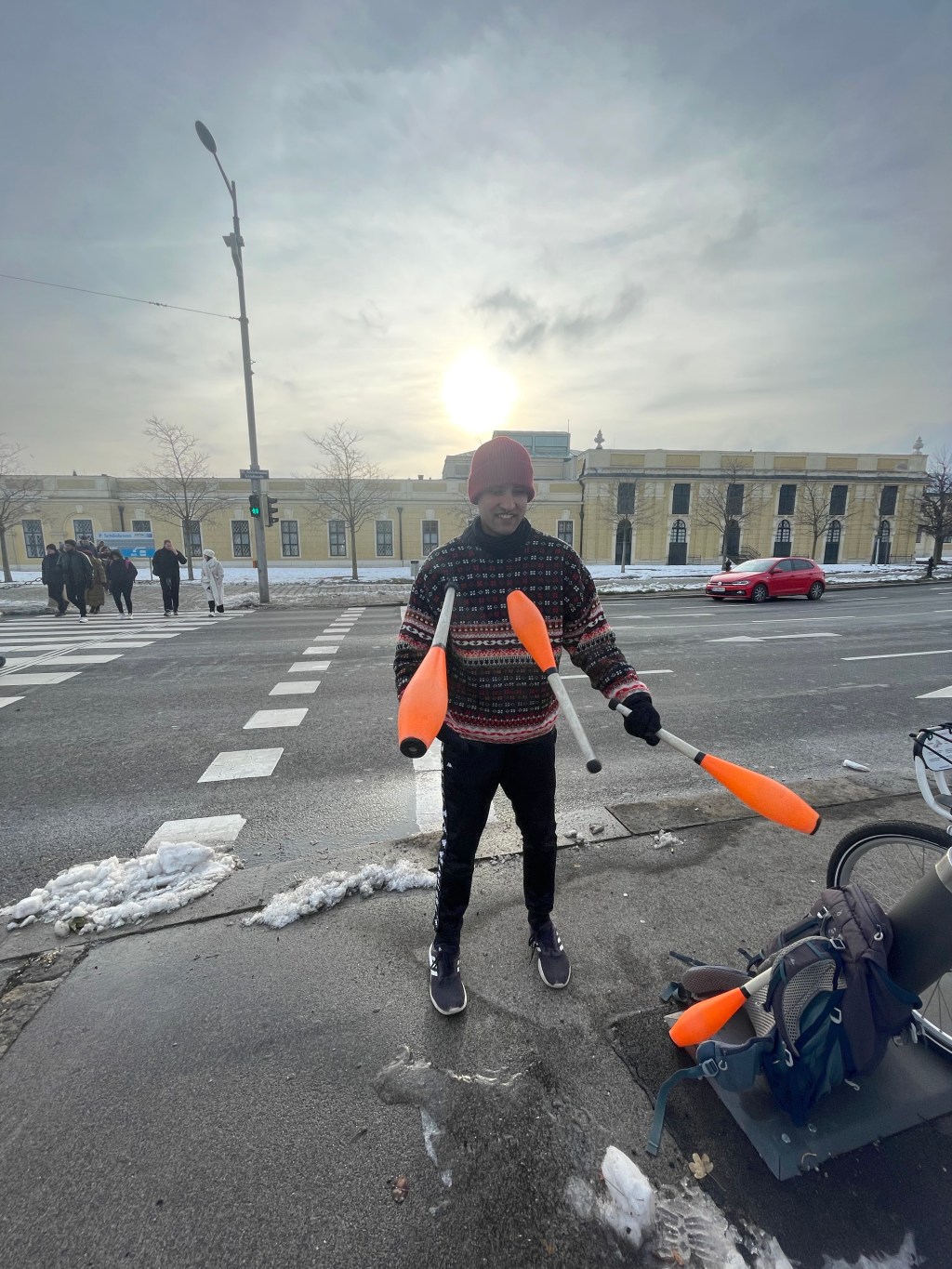
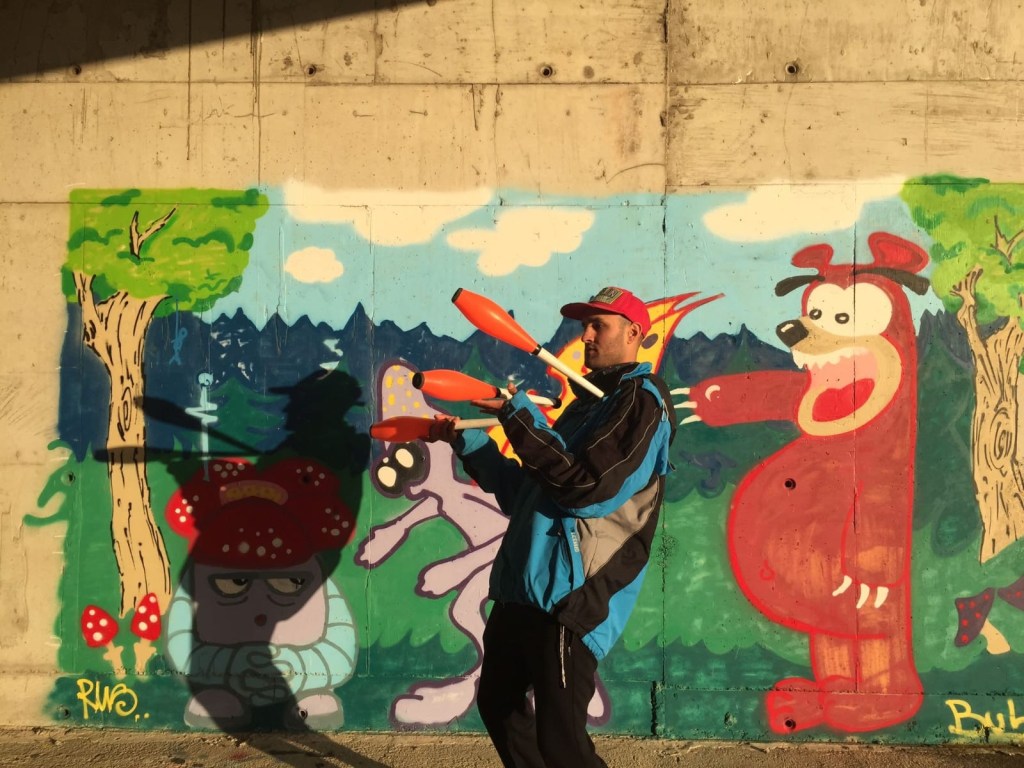
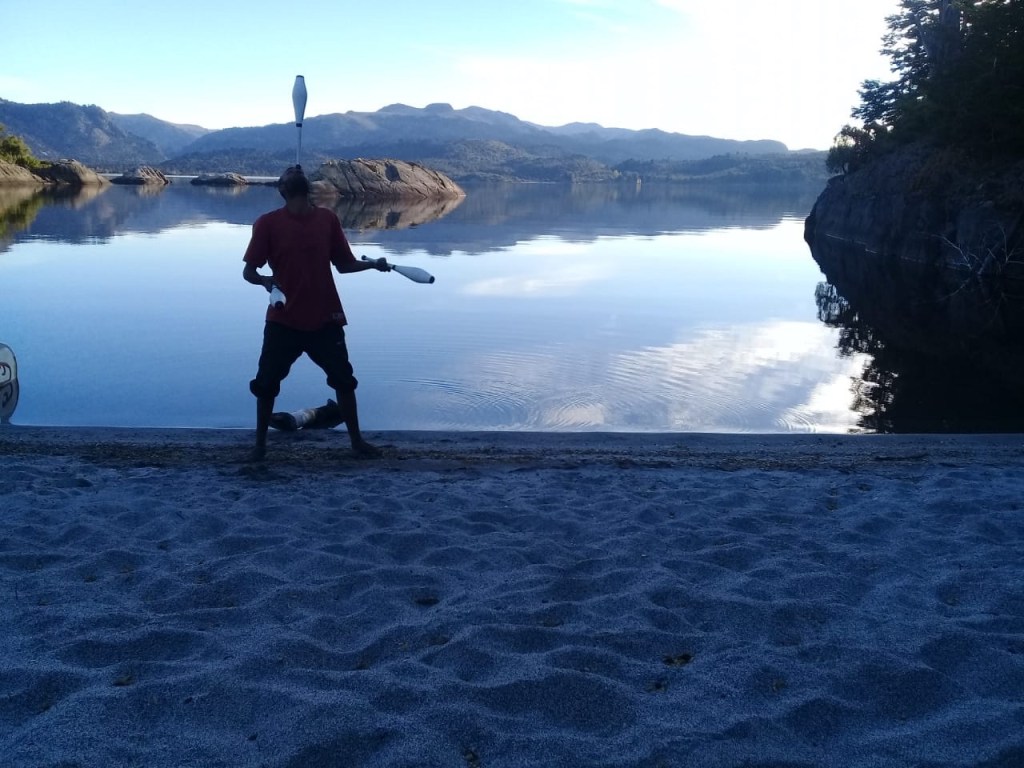
„Hey can I have a buff?“, fragt mich Lautaro bei der 10A Station Familienplatz. Wir kommen ins Gespräch und es stellt sich raus, dass Lautaro ein Straßenkünstler aus Argentinien ist. Er besitzt aber auch die italienische Staatsbürgerschaft, weil sein Großvater Italiener war, erzählt er mir, während wir auf den Bus warten und uns vor der Polizeistation einbuffen. Ich frage Lautaro, was in der Sprache der Mapuche der schnelle Raubvogel heißt, ob er bei mir auf der Couch übernachten möchte und wir dafür ein Interview für KUSO mit ihm machen dürfen. Er stimmt zu und so folge ich ihm zuallererst direkt nach Schönbrunn, wo ich ihn in Action, also bei der Arbeit fotografieren und filmen darf, wohlgemerkt bei klirrender Kälte. Am nächsten Tag kommt er auch schon mit Sach und Pack bei mir in meiner Einzimmerwohnung an. Er ist ein unauffälliger aber geselliger Gast, der nicht scheut mein ganzes Geschirr zu waschen und mir sogar ein Gastgeschenk, nämlich einen Weihnachtspyjama macht. Zusammen haben wir Hanf Brownies gebacken und ich hab ihm das Neunerhaus Café in der Margaretenstraße 166 gezeigt, wo man gegen eine freie Spende ein warmes Mittagessen bekommt. Lautaro hat in mir die Sehnsucht nach der Ferne geweckt, hat mir Mut gemacht, dass es auch anders geht, das Leben zu leben, anders als ich es kenne und Hoffnung auf eine bessere Welt.
Das ganze Interview lest ihr auf Englisch und Spanisch im folgenden Absatz.

What was your dream job as a child an why?
S: Cuando era niño queria ser Paleontólogo, pero no recuerdo bienel motivo, probablemente por algúna famosa película que me gustaba mucho.
E: When I was a kid I wanted to be a Paleontologist, but I don’t remember why, probably because of some famous movie that I liked a lot.
When and from who did you learn how to juggle?
S: Hacia el 2017 empecé a hacer malabares, en medio de un viaje por Sudamerica. En ese momento viajaba con un amigo por Colombia. Él me enseñó lo primero sobre los malabares a lo largo de algunos años, porque somos amigos de la infancia.Principalmente recuerdo mis primeras practicas en Buzios, Brasil, donde viví por casi dos anios.
E: Around 2017 I started juggling, in the middle of a trip through South America. At that time I was traveling with a friend in Colombia. He taught me the first thing about juggling over the years, because we are childhood friends. I mainly remember my first practices in Buzios, Brazil, where I lived for almost two years.
When and why did you decide to travel and work as a street artist?
S: En cierto momento del viaje por Colombia se me acabó el dinero, pero yo quería seguir viajando y conociendo. Ahí descubrí un nuevo mundo en donde muchas personas viajaban hacía años, sin limites y sin fin. Y lo hacían generalmente viviendo del arte, ya sea de malabareas, o de la música, o de artesanías, pero siempre en la calle. Mi vida cambió totalmente desde entonces, fue un quiebre.
E: At a certain point of the trip through Colombia I ran out of money, but I wanted to continue traveling and getting to know. There I discovered a new world where many people were traveling for years, without limits and without end. And they did it generally living from art, either from juggling, or music, or handicrafts, but always in the street. My life changed completely since then, it was a break.
Why did you leave everything (Family,Friends,Job) behind?
S: Sinceramente no considero haber dejado atrás a familia y amigos (pero el trabajo si hahah). Tengo contacto a diario con mi familia y con varios amigos. Pero lo que hoy elijo de mi vida es esto, es viajar y conocer el mundo, que tiene lugares y personas y experiencias por vivir. La familia siempre la tengo presenteconmigo, y no como algo de atrás, sino del presente y del futuro también. Siempre están conmigo.
E: I honestly don’t consider myself to have left family and friends behind (but yes the work hahah). I have daily contact with my family and several friends. But what I choose from my life today is this, is to travel and see the world, which has places and people and experiences to live. The family is always present with me, and not as something from the past, but from the present and the future as well. They are always with me.
Whats the hardest/sadest/coolest/most interesting part of your life?
S: No tengo una respuesta exacta, son cosas que van cambiando creo. Lo mas interesante supongo es la posibilidad de hacer dinero con algo que me gusta y poder hacerlo para sostener mi vida y mi viaje. Trabajar en la calle tiene su rudeza y sus peligros, hay que estar atento.
E: I don’t have an exact answer, they are things that keep changing I think. The most interesting thing I guess is the possibility of making money with something I like and being able to do it to support my life and my journey. Working on the street has its roughness and its dangers sometimes, you have to be careful.
What was the funniest/scariest thing which happened to you on the road?
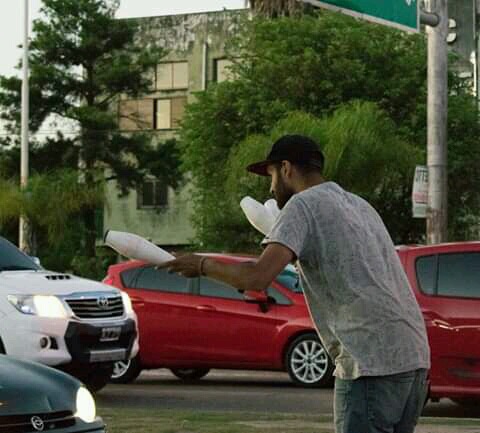
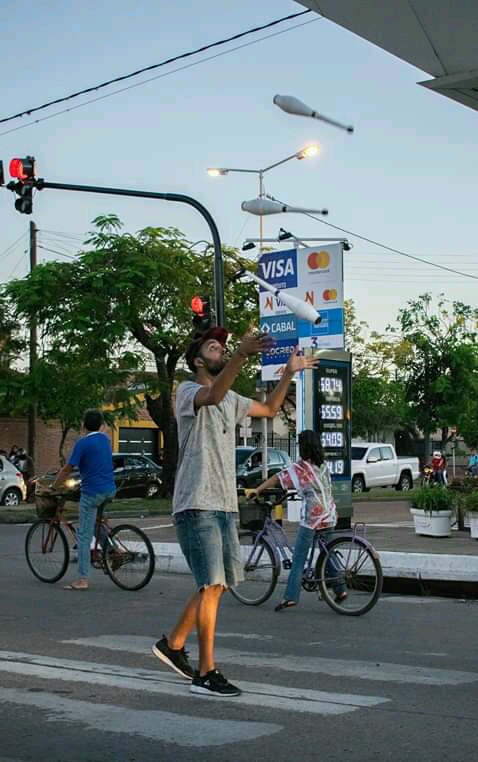
S: Supongo que hay muchas graciosas, pero no todas se pueden contar hahahah. En latinoamerica haciendo dedo he conocidopersonajes muy particulares En verdadero peligro nunca me encontré, pero si me ha tratado mal la policia, como siempre, haciendome vivir situaciones feas por el simple hecho de hacer malabares en el semaforo.
E: I guess there are many funny ones, but not all of them can be counted hahahah. In latin america hitchhiking I’ve met very particular characters. I’ve never been in real danger, but I’ve been treated badly by the police, as always, making me live ugly situations for the simple fact of juggling at the traffic lights.
Whats the most important thing/skill to do or to have when you work and travel at the same time?
S: Creo que es bueno viajar ligero, con pocas cosas. Estar dispuesto a adaptarse a situaciones nuevas constantemente.
E: I think it is good to travel light, with few things. Be willing to adapt to new situations constantly.
Can you imagine to settle down somewhere in the Future? If yes, where would it be and why?
S: Si claro, en algun momento voy a frenar, logicamente uno crece y el cuerpo se cansa de viajar y moverse constantemente. O también simplemente uno puede decidir quedarse en un sitio porque le gusta. Aún no se donde ni cuando, creo que me faltan conocer muchos sitios y culturas como para decidir eso.
E: Of course, at some point I will slow down, logically one grows up and the body gets tired of traveling and moving constantly. Or you can simply decide to stay in a place because you like it. I still don’t know where or when, I think I still have to get to know many places and cultures to decide that.
What‘s your biggest dream/wish?
S: No lo sé. Hace unos meses leí una frase de un amigo que me gustó y quedó sonando en mi cabeza. “L’insegnamento della strada per la vita, senza soldi, senza meta, senza guida”. Al momento no hay una meta o un sueño a alcanzar más que transitar el camino.
E: I don’t know. A few months ago I read a phrase from a friend that I liked and it kept ringing in my head. „L’insegnamento della strada per la vita, senza soldi, senza meta, senza guida“. At the moment there is no goal or dream to reach. Only to travel the road.
What makes you happy?
S: A veces me lo pregunto también. Es una constante busqueda supongo. Ver a mi familia feliz, rodearme de gente de buen corazón, fumar un porrito en buena compañia. Esas son imagenes que me transmiten un lindo sentir. Felicidad podría llamarlo.
E: Sometimes I wonder about that too. It’s a constant search I guess. Seeing my family happy, surrounding myself with good-hearted people, smoking a joint in good company. Those are images that transmit me a nice feeling. Happiness I could call it.
How would your dream world look like?
S: Nunca pensé en esto. Creo que el mundo, en general, es demasiado terrible e injusto para con muchas personas. Eliminar el hambre y la guerra en el mundo me suena a caer en lugares comunes. Es decir, ¿Quien no querria eso?. Creo que el mundo funciona como funciona porque hay gente a la que le conviene. Gente que quizas ni les conocemos la cara, y hacen negocio del hambre, la guerra y la muerte. Así que no se como sería mi mundo de los sueños, pero bien alejado del actual.
E: I never thought about this. I think the world, in general, is too terrible and unfair to many people. Eliminating hunger and war in the world sounds like a very common thing to me. I mean, ¿who wouldn’t want that? I think the world works the way it does because there are people it suits. People that maybe we don’t even know their faces, and they make a business out of hunger, war and death. So I don’t know what my dream world would be like, but it would be far away from the current one.
Are you afraid of the future and if yes/no…why/why not?
S: No creo que asustado sea la palabra, pero claro que a veces tengo mis problemas, mis preguntas, y mis inseguridades, como todas las personas.
E: I don’t think scared is the word, but of course sometimes I have my problems, my questions, and my insecurities, like all people.


 KUSO
KUSO 
Hinterlasse einen Kommentar